
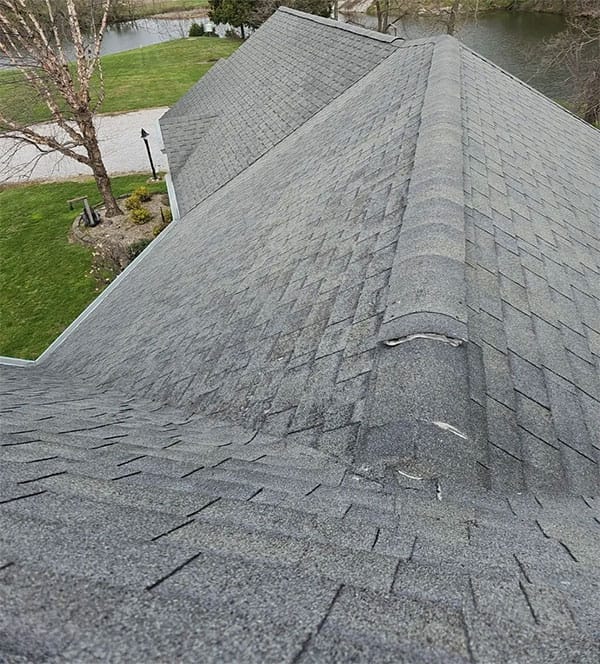
What we do after a storm
Spring and summer storms bring most of the hail and wind damage we see around Terre Haute and the Wabash Valley. The National Weather Service calls a thunderstorm severe when it brings hail an inch or larger, about the size of a quarter, or wind gusts of 58 mph or more.
Here’s what we do:
- Free inspection. Doug Stoliby, our sales manager, reaches out within 1 business day to set it up. We go on the roof and into the attic, and check the gutters, vents and flashing too.
- Documentation. We photograph and write down what we find, so you have a record for your insurance claim.
- Adjuster meeting. We meet your insurance adjuster on site and show them the damage, so they see what we saw.
- Written scope. Within 5 business days of the inspection, you get a budget and a written scope of the work.
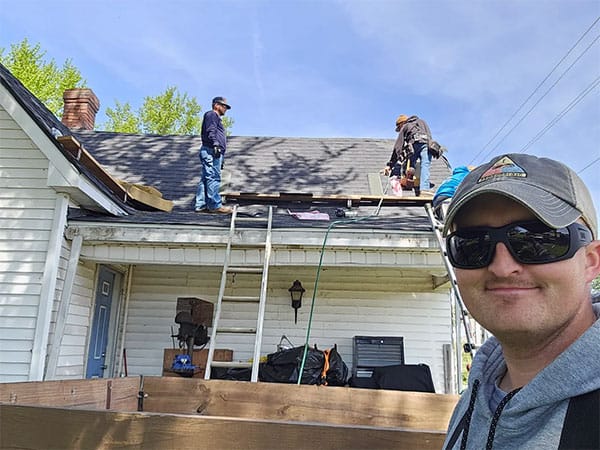
- The work. Our own union roofing crew, led by roofing foreman Timmy Burgess, does the repair or the replacement.
And here’s what we don’t do:
- We never waive, pay or rebate deductibles. It’s against Indiana law.
- We don’t act as your adjuster. You file the claim and deal with your insurance company. The coverage decision is theirs.
- We don’t roof in Illinois. We don’t hold an Illinois roofing license. If you’d like, we’re happy to connect you with a union roofer in Illinois that we trust.
- Roof inspectionFreeInspection and estimate at no cost
- Roof repair$650–$3,800Typical repair, per job
- Residential roof$10k–$105kRange of replacements we've bid
Prices checked October 2026. Every proposal is one all-inclusive price: permits and sales tax built in.
Signs of hail and wind damage
Please don’t climb onto a roof after a storm to look. Wet or damaged shingles are slick, and getting up there is our job. From the ground, look for:
- Shingles or pieces of shingle in the yard. Wind can tear them off, or lift them and break the seal strip that holds them flat.
- Dents in gutters, downspouts and metal vents. Soft metal shows hail hits that shingles hide.
- Piles of granules at the downspouts. Hail knocks the granules off shingles, and the rain washes them down.
- New stains on ceilings or wet spots in the attic. A storm can open a leak that only shows up in the next rain.
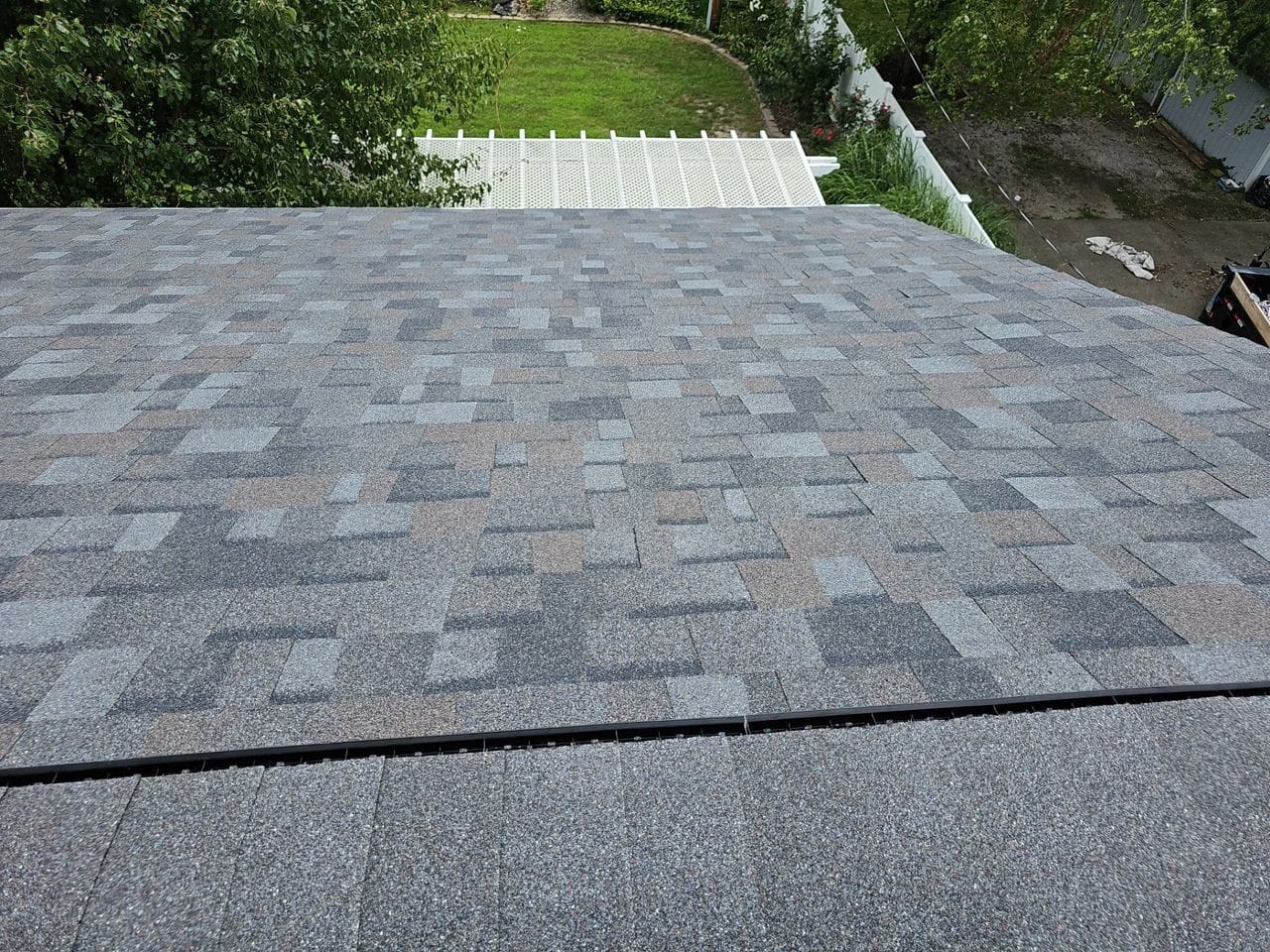
What to do after a storm
The Indiana Department of Insurance publishes tips for filing an insurance claim. Here’s that advice in order:
- Photograph the damage — Take photos or video of the roof, the yard, your ceilings and the attic before any temporary repairs.
- Stop more damage, temporarily — Make only temporary repairs to keep water out, such as covering a leak, and keep the receipts. An insurer may deny a claim if permanent repairs are made before the damage is inspected.
- Know your policy — Look up what it covers, what it excludes and what your deductible is.
- Report the claim promptly — Call your agent or your insurance company’s claims line. Your policy may set a deadline for notice.
- Get an estimate before the adjuster comes — This is where our free inspection fits. Have records of past roof work ready for the adjuster too.
- Keep a log — Write down every call: the date, who you talked to, their title and what was said. Keep copies of letters and emails.
- Review the settlement — Ask for an itemized explanation of any offer, and don’t accept the first one automatically. If the claim is denied, ask for the denial in writing with the policy language cited.
How we work with your adjuster
Your insurance company sends an adjuster to inspect the damage and decide what the policy covers. We meet the adjuster on site and walk the roof with them, pointing out the damage we documented. After that, the decision is theirs. We don’t negotiate your claim, and Indiana law says a home improvement contractor can’t act as a public adjuster.
If the adjuster’s scope doesn’t match ours, ask your insurance company for an itemized explanation and for the policy language behind anything they won’t cover. Our price follows the scope your insurer approves in writing. If that scope misses damage, we document it with photos so you can ask your insurer for a supplement.
Indiana law also shapes insurance-job contracts. The contract can describe the work as restoring your home to its pre-loss or comparable condition, count the start and finish dates from your insurer’s approval, and state the price as what you owe after the insurance money. On our insurance jobs, the start and finish dates typically count from your insurer’s written approval. And when a subcontractor or other third party furnishes labor or materials, neither the contractor nor that third party can start or pursue a claim with your insurance company. The claim stays in your hands.
Why we never waive deductibles
Your deductible is your share of the loss under your policy. Some storm contractors offer to take care of it for you: they knock it off the price, hand you a gift card, or pay you to put their sign in your yard.
In Indiana, that’s against the law. The Home Improvement Contracts Act says a contractor can’t advertise, offer or promise to pay or rebate any part of your deductible to get the job. That covers discounts, gifts, bonuses, credits, referral fees and payment for a yard sign. The Indiana Attorney General lists deductible-waiver offers as a red flag, and a violation counts as a deceptive act under Indiana’s consumer sales law.
There’s a practical reason too. A roofer who covers your deductible has to make that money back somewhere, and it usually comes out of the materials or the work. We’d rather lose the job than start it that way.
Is it worth filing a claim?
Sometimes the damage costs less to fix than you’d expect. Most roof repairs we do run about $650 to $3,800, and small repairs such as a pipe boot start around $500. The residential roof replacements we’ve bid have run from $10,000 to $105,000. Compare our estimate to your deductible before you decide.
Indiana limits the reasons an insurer can cancel a homeowners policy, but it doesn’t require the insurer to renew it, and insurers may weigh your claim history, small claims included. Whether to file is your decision to make with your agent. We’ll give you an honest estimate either way.
Storm chasers and red flags
Big storms bring out storm chasers. In August 2026, after a derecho and flooding, the Indiana Attorney General warned Hoosiers about storm-repair scams. Watch for these:
- An offer to cover your deductible. A discount, a gift card, a referral fee or money for a yard sign all count, and all are illegal in Indiana.
- An offer to handle your claim. A home improvement contractor can’t act as a public adjuster in Indiana.
- A contract that signs over your insurance rights. An Indiana home improvement contract can’t assign your rights to the contractor or anyone else.
- Anyone who wants to talk to your insurer as you. Impersonating a homeowner with their insurance company is a crime in Indiana.
- No local registration or insurance. Inside Terre Haute, a contractor working for a homeowner has to be registered or licensed with the city. Registration takes a $10,000 bond or letter of credit and at least $500,000 in liability insurance, plus workers’ compensation for contractors with employees. Ours is CL003471, and we’ll send our certificate of insurance on request.
- No written contract, or one missing the basics. See the list below.
What an Indiana home improvement contract has to include
Before you sign, Indiana law requires the contractor to give you a completed contract. At a minimum, it has to include:
- Your name and the property address
- The contractor’s name, address and email
- The name, phone and email of the contractor’s contact person
- The date it was submitted and any deadline to accept it
- A reasonably detailed description of the work
- Approximate start and finish dates, and anything that could change them
- The contract price
- Whether any subcontractor, vendor or other third party will furnish labor or materials
- Signature lines with printed names
Any change to the contract has to be in writing and signed by you to be enforceable against you. Hold every contract to that list, ours included.
Your right to cancel
You can cancel an Indiana home improvement contract before midnight of the third business day after the later of two dates: the day you signed, or, if insurance is involved, the day you get your insurer’s written final decision on whether the claim is covered. The contract has to state that right and include a notice of cancellation form. You can send the notice by mail or email, and the contractor has 10 days to return your payments. Look for that statement and the cancellation form in any contract you’re offered, ours included.
This is a plain-English summary of the Indiana Home Improvement Contracts Act, not legal advice. For questions about your rights, talk to an attorney or the Indiana Attorney General’s Consumer Protection Division. Questions about your coverage go to your agent or insurance company.
Repairing or replacing a storm-damaged roof
The work itself is the same as any roof we do:
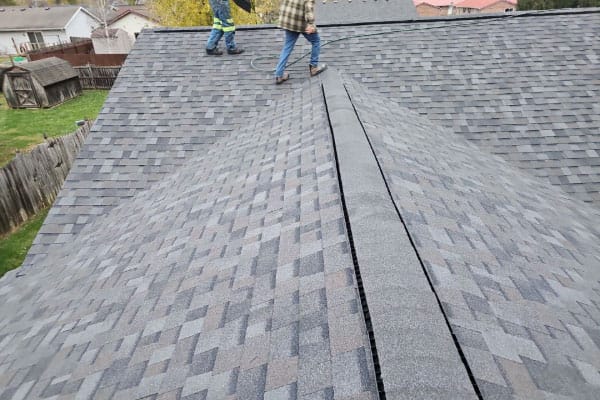
- Repairs. Wind damage limited to one area often calls for a repair: lifted shingles re-secured or replaced, new ridge caps or a new pipe boot. See roof repair.
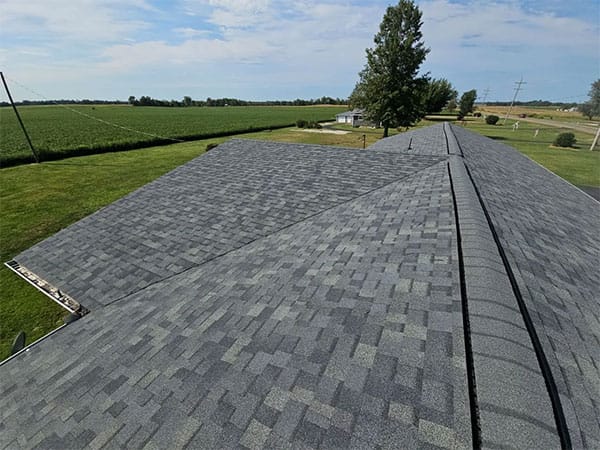
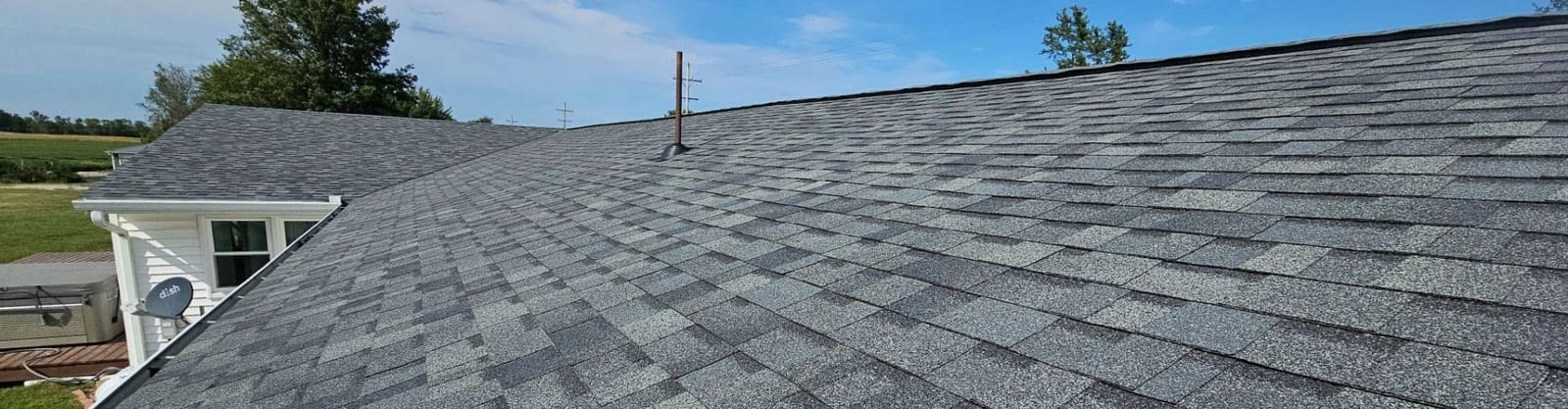
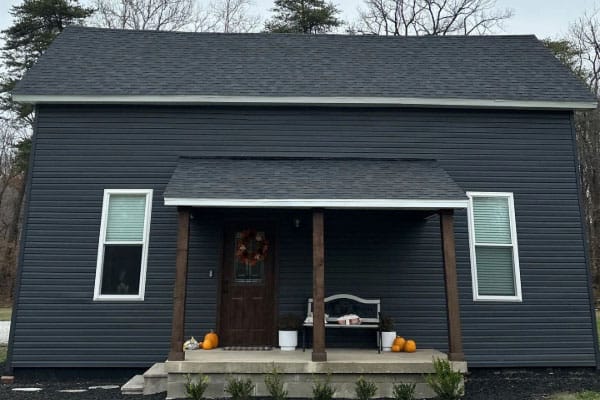
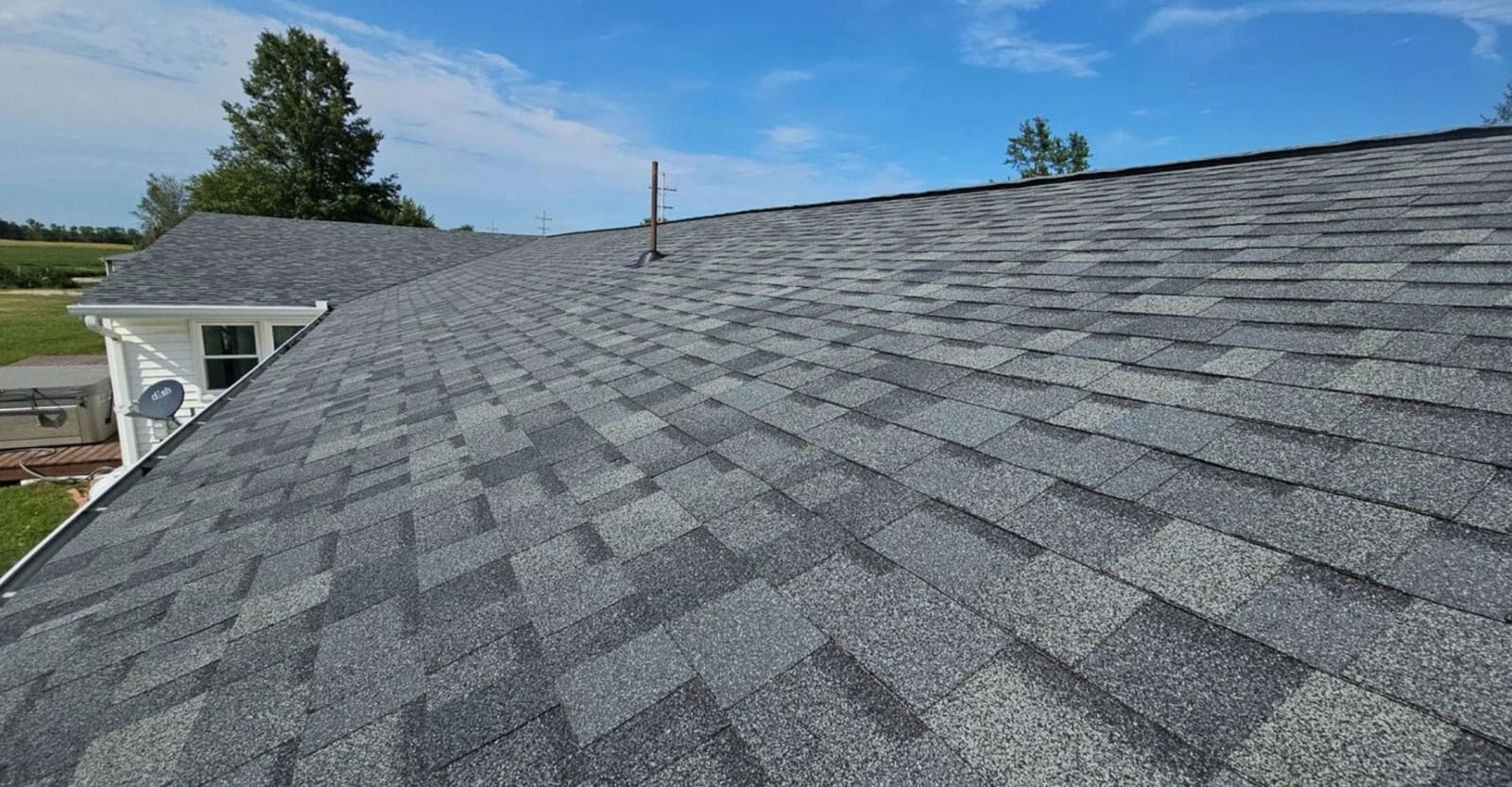
- Replacement. When the damage is spread across the whole roof, a replacement may make more sense than patching. Our recent asphalt re-roofs ran $525 to $560 per square (100 square feet), tear-off included. We don’t price roofs by the square, though: every proposal is built from the actual cost of your job, and that figure is simply what our past bids have worked out to. See roof replacement.
- Impact ratings. Shingles are rated for hail impact from Class 1 to Class 4, with Class 4 the toughest. Our recent asphalt replacements used Class 3 shingles, and our 2026 metal re-roof used Class 4 panels.
- Gutters. Hail dents gutters and downspouts too. See gutters.
We pull the permit wherever one is required, protect your lawn and driveway, and run magnetic sweeps for nails. Our one-year workmanship warranty covers our installation, starting at substantial completion. Hail that hits after the install is an insurance matter, not a warranty one.
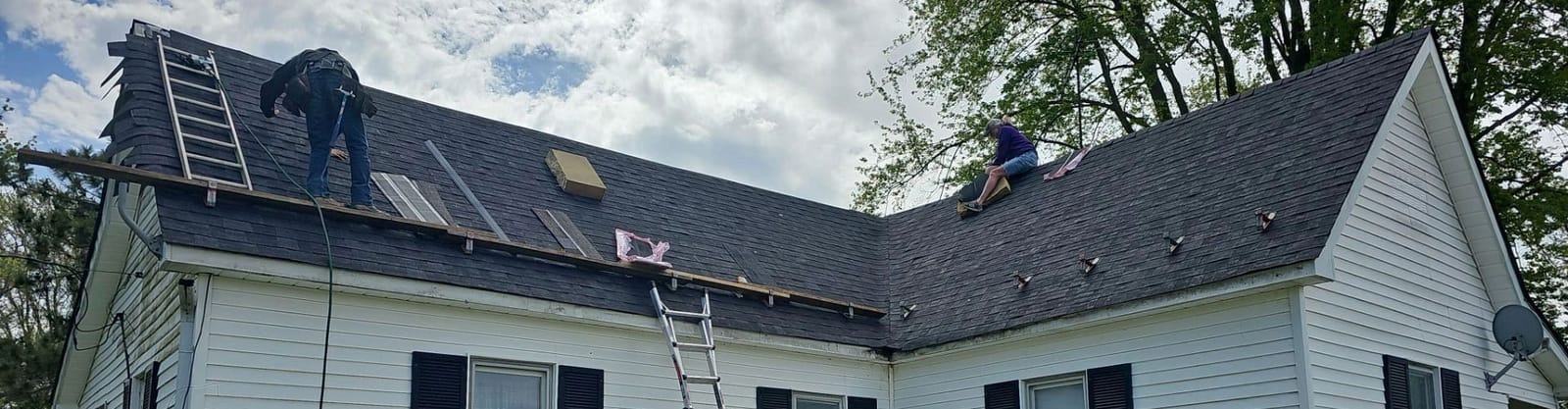
Paying for storm work
Roof work, including insurance roofs, is typically billed 75% at signing and 25% on completion. The deposit covers the materials we order for your roof. You can pay online through the invoice link, by check or in cash. Financing is available through HFS, subject to credit approval.
Who’s on your roof
Roofing foreman Timmy Burgess and our union roofing crew. We’re registered with the City of Terre Haute (CL003471), bonded, and insured for general liability and workers’ compensation. Our customers have given us 5.0 stars from 82 reviews on Google, Facebook and Trex.
Contacted White Rock Construction about checking our roof for possible leaks. He came out the same day and checked it out. After sealing some holes he told us it was probably wind that blew up some shingles allowing the rain to come in. Friendly and honest service.
Very professional right down to the detail!
The crew was very professional, fast, and did great work!
5.0 stars from 82 reviews. Read them on Google (71), Facebook (10) and our TrexPro profile (1).
Storm damage and insurance questions
Will my insurance pay for a new roof after hail?
It may. That depends on your policy and the damage, and the decision belongs to your insurance company. We document the damage, meet the adjuster on site and show them what we found.
Do you waive or pay deductibles?
No. Indiana law bars contractors from advertising, offering or promising to pay or rebate any part of your deductible, including through discounts, gifts or yard-sign payments. We wouldn’t do it anyway.
Should I call my insurance company or a roofer first?
Report the damage to your insurer promptly, because your policy may set a deadline. The Indiana Department of Insurance also suggests getting a repair estimate before the adjuster comes, if you can. Our inspection is free, so the order is up to you.
Can you file the claim or talk to my insurer for me?
No. You file the claim and deal with your insurance company. We meet the adjuster on site and share our documentation, but Indiana law doesn’t let a home improvement contractor act as a public adjuster.
What if my claim is denied?
Ask your insurance company for the denial in writing, with the policy language it relies on. If you think the claim was handled unfairly, the Indiana Department of Insurance takes consumer complaints.
Storm damage on your roof?
Send us a few details and Doug Stoliby, our sales manager, will contact you within one business day to discuss your goals, answer questions and schedule a site visit.

Doug Stoliby, Sales ManagerDoug will reach out within 1 business day.